3 hr 45 min
Arashiyama Rickshaw Journey & Bamboo Grove
- Entry ticket
- Mobile voucher
- Valid same day
- Free cancellation
Arashiyama Rickshaw Ride — Jinrikisha Courses Through Sagano
Two wheels through green corridors, one runner setting the pace.
Compare fares, pick the fit — all bookings are mobile-voucher and eligible for free cancellation where shown.
3 hr 45 min
6 hr
5 hr 30 min
Selecting the right arashiyama rickshaw ride allows you to personalize your journey through Kyoto’s iconic bamboo groves and historic districts. Choosing between different durations ensures your local sightseeing tour fits perfectly into your daily itinerary.
| 30-Minute Tour Bamboo Forest Focus |
Top pick 45-Minute Tour Saga-Arashiyama Exploration |
70-Minute Tour Comprehensive Scenic Route | |
|---|---|---|---|
| Duration | 30 minutes | 45 minutes | 70 minutes |
| Key Areas | Bamboo Grove and Bridge | Historic Streets and Temples | Extended Sagano Region |
| Access Method | Private rickshaw | Private rickshaw | Private rickshaw |
| What is included | Guide and ride | Guide and ride | Guide and ride |
| Best for | First-time visitors | Balanced sightseeing | In-depth exploration |
| See tickets & prices |
Verdict: For most first-time visitors, the 45-minute arashiyama rickshaw ride tour offers the ideal balance of scenic bamboo forest views and historic temple area discovery.
Worth it for mobility-limited and first-time visitors
The arashiyama rickshaw ride has no fixed entrance fee — you pay by duration and course, and the bookable rate is whatever the tour grid shows for the Arashiyama Rickshaw Journey & Bamboo Grove option. What that buys is a trained ebisuya puller who doubles as a guide, access to a private lane through the bamboo grove that walkers cannot use, and a seat that spares your legs on the Sagano slopes. Value hinges on who you are. Couples, older travellers, families with small children and anyone shooting portraits get real return: the driver stops, narrates Tenryu-ji and the Katsura riverfront, and takes your photos. Fit budget walkers covering the same ground on foot will find a jinrikisha ride an expensive convenience, since the bamboo path itself costs nothing to enter. Book on site at Sagatenryuji Susukinobabacho or by phone on 075-864-4444.
Bottom line: If your legs, camera or kids need the help, arashiyama rickshaw ride tickets earn their keep; if you are happy walking, keep the money for lunch.
They complement each other; most visitors who do both call the arashiyama rickshaw ride the more comfortable perspective while walking tours offer deeper immersion. Choosing between these methods depends on your desire for curated storytelling versus independent exploration.
|
Top pick Rickshaw Ride |
Walking Tours | |
|---|---|---|
| Perspective | Elevated seating | Ground level |
| Pacing | Controlled speed | Self-determined pace |
| Access to Narrow Alleys | Limited | High access |
| Social Interaction | One-on-one guide | Group dynamic |
| Effort Level | Minimal physical exertion | Moderate walking required |
| Customization | Set course options | Flexible routing |
| See tickets & prices |
Verdict: Opt for the arashiyama rickshaw ride tours if you prefer a guided narrative from a high vantage point, whereas travelers seeking to independently navigate every hidden corner should select arashiyama rickshaw ride tickets for a walking excursion that requires no arashiyama rickshaw ride tour booking.
Hand-picked experiences loved by thousands of travelers
4 hours
Free Cancellation
Half-day journey through Kyoto's iconic district featuring serene gardens, towering bamboo, and mountain-dwelling macaques
9-10 hours
Free Cancellation
Journey through bamboo groves, meet roaming deer, and walk beneath thousands of sacred gates
9-10 hours
Free Cancellation
Journey through ancient temples, bamboo groves, and golden pavilions on this immersive full-day tour
1.5 hours
Free Cancellation
Explore Kyoto's legendary bamboo forest, serene Zen gardens, and riverside scenery on this cultural walk
4.5 to 5 hours
Free Cancellation
Journey through Kyoto's scenic landscapes by rail and boat, then soak in natural thermal waters
7 hours
Free Cancellation
Glide through bamboo forests by rickshaw, then master the art of preparing authentic matcha tea
10 hours
Free Cancellation
Discover ancient temples, golden pavilions, and serene gardens on this comprehensive guided journey
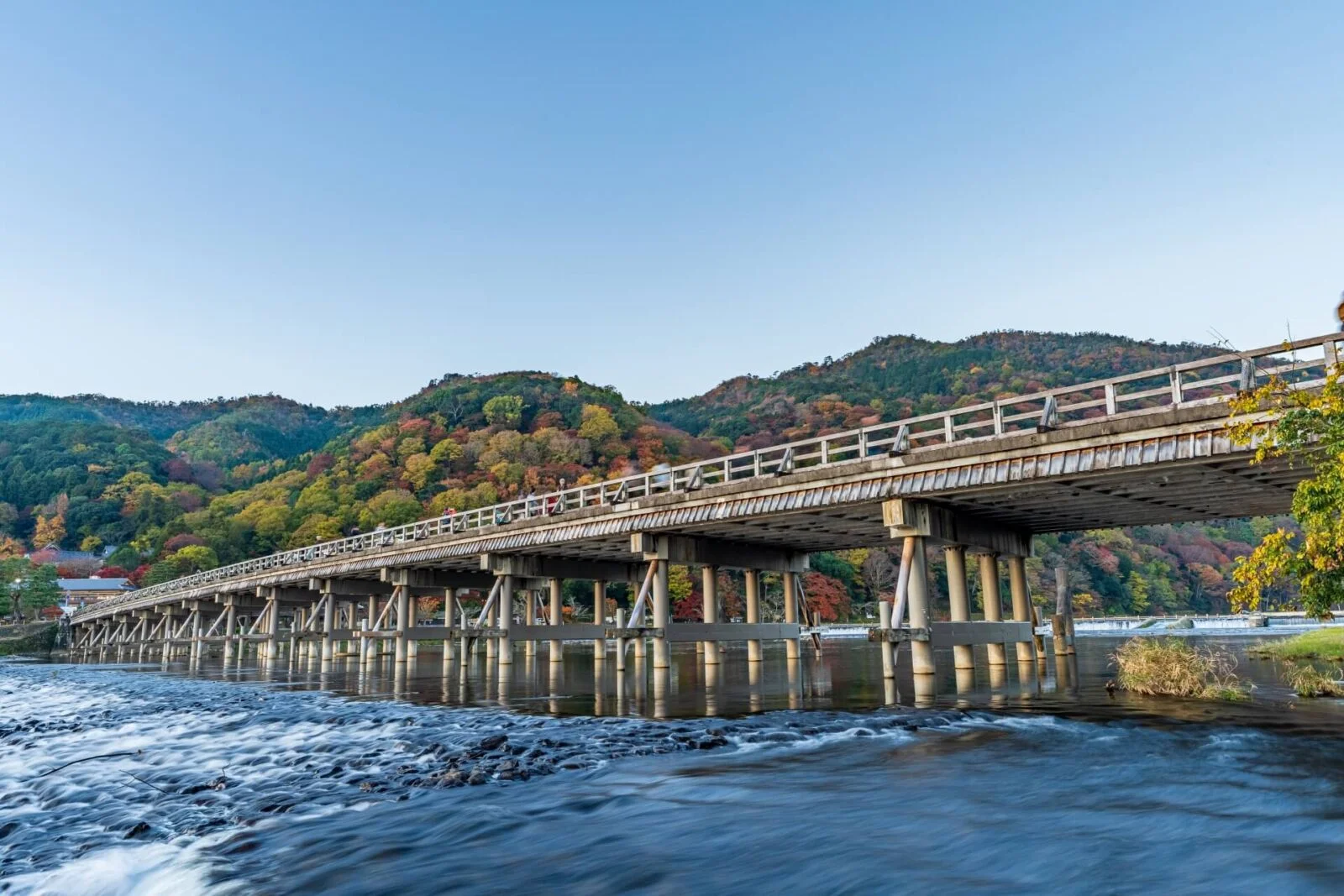
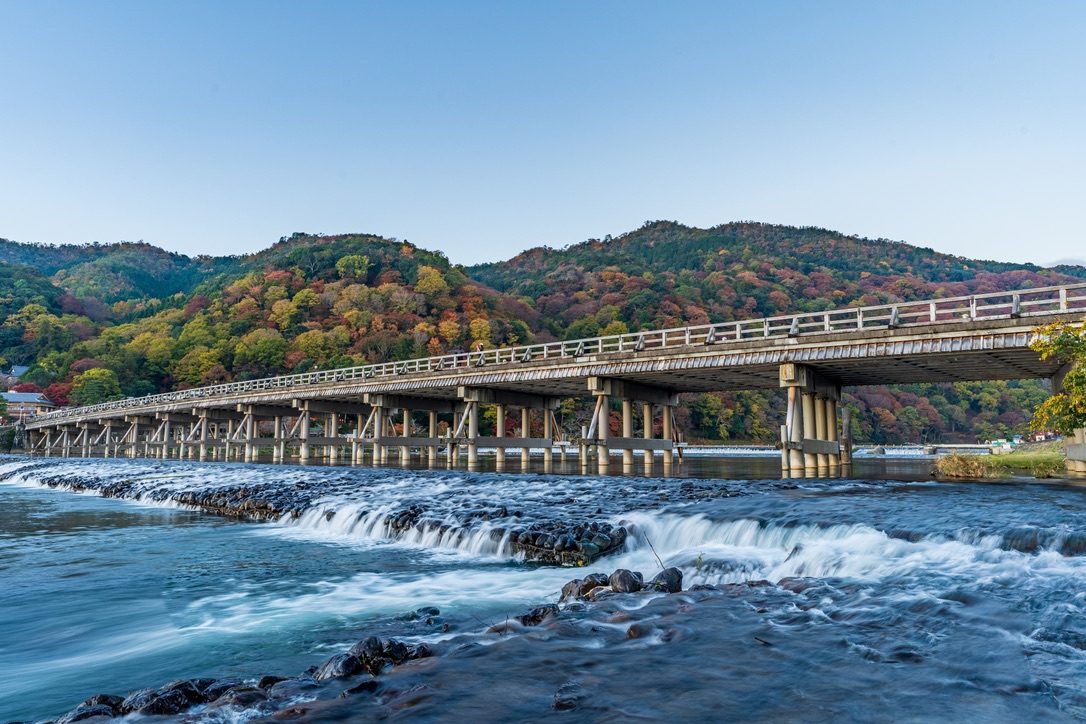
The iconic bridge offers panoramic views of the forested mountainside and river.
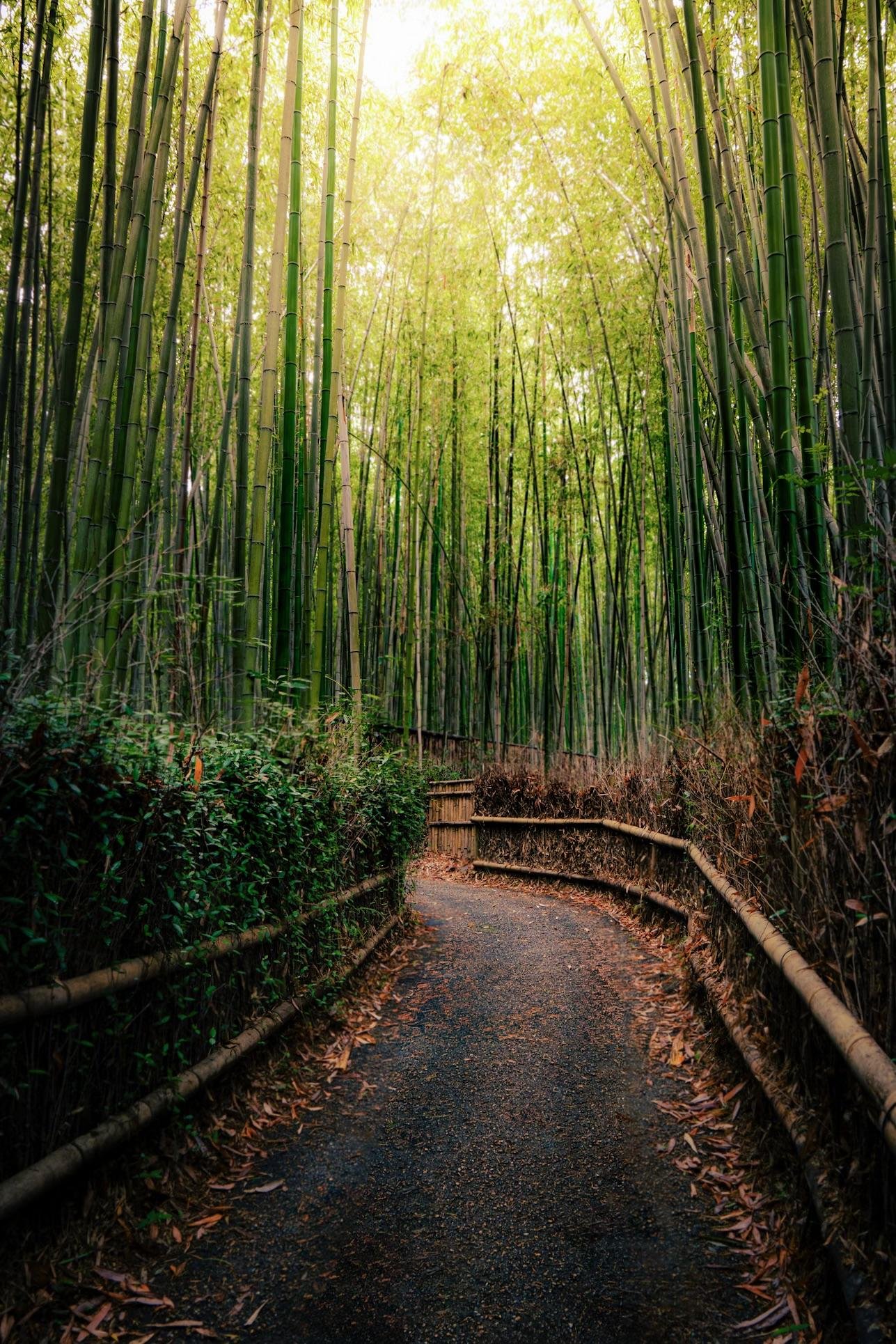
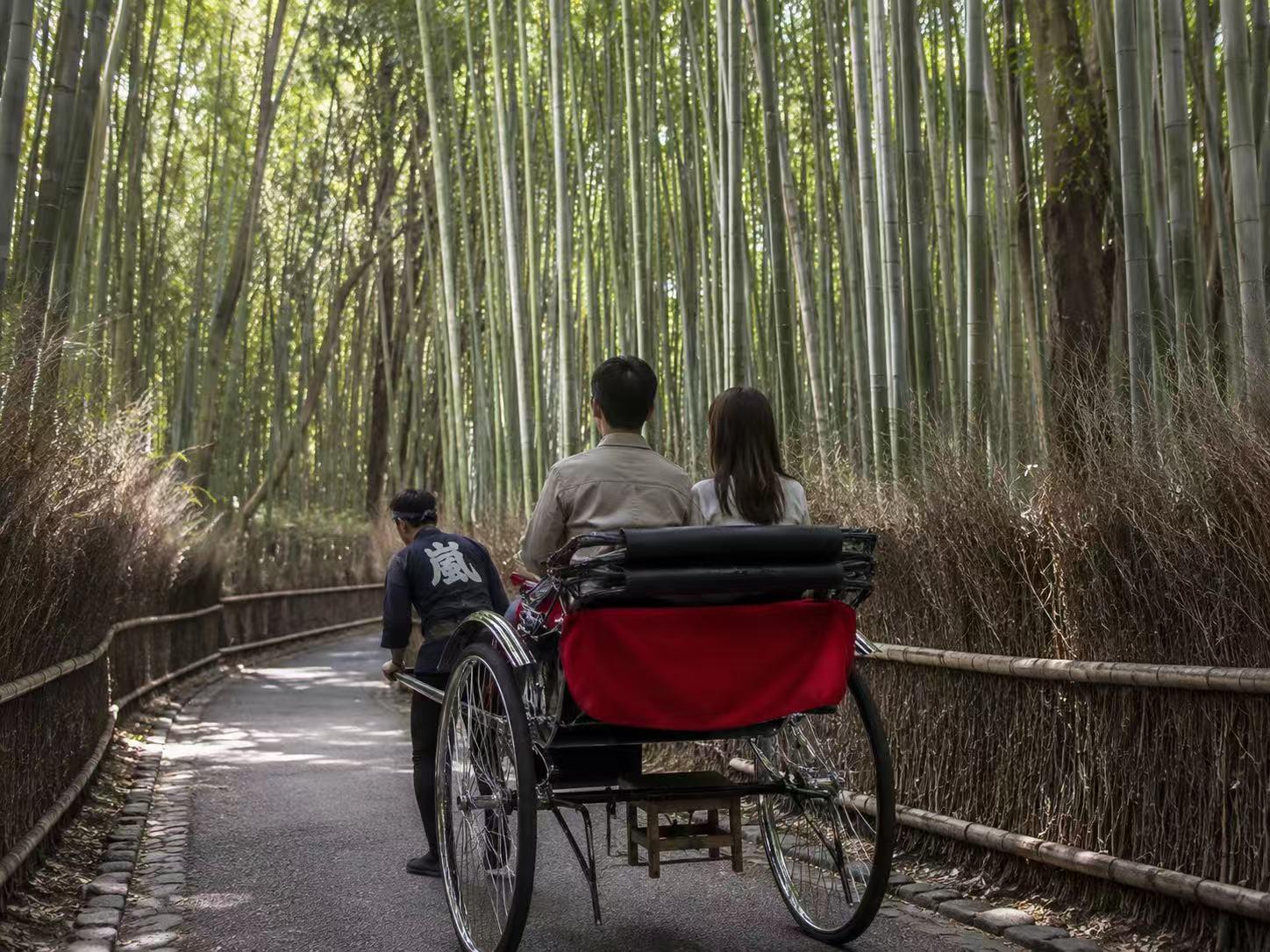
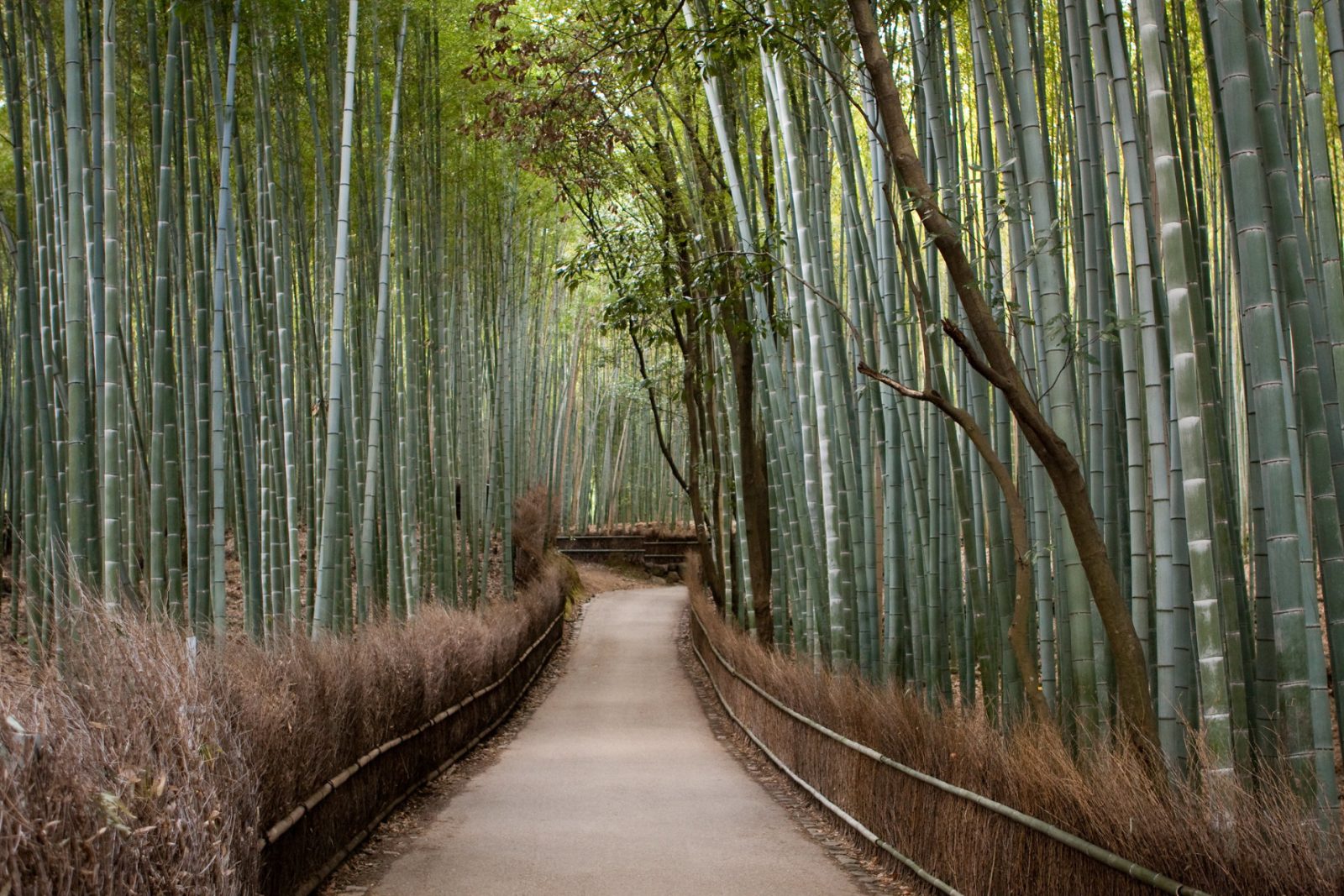
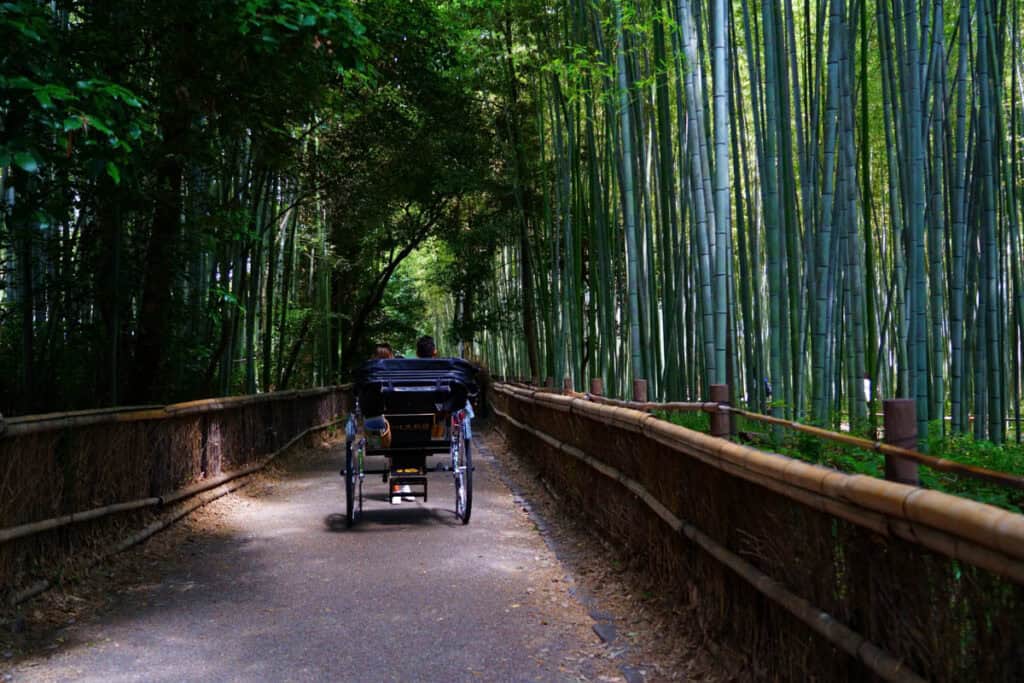
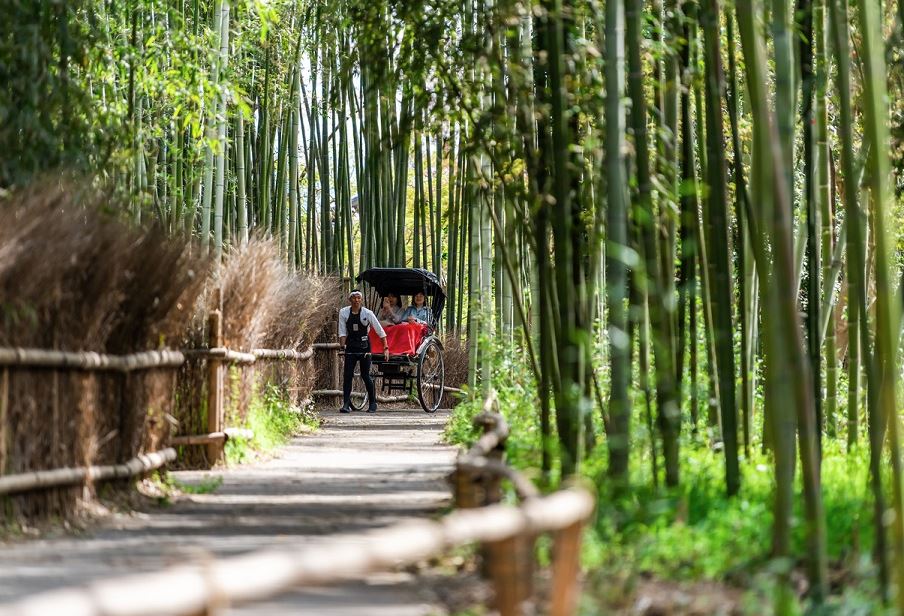
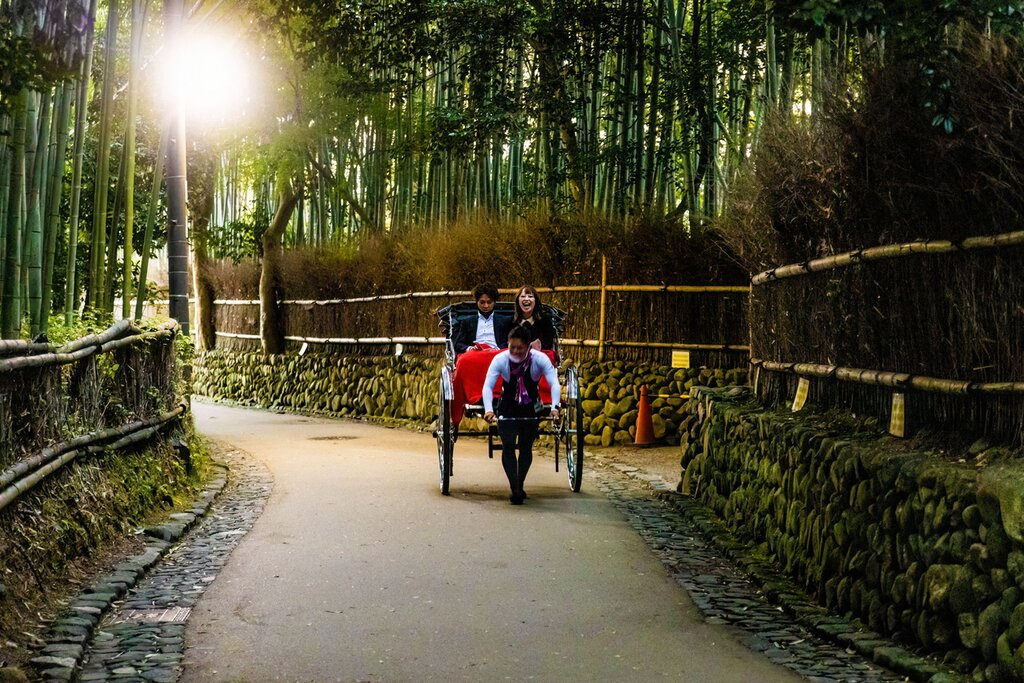
A specialized path reserved for rickshaws allows for a tranquil experience away from pedestrian crowds.
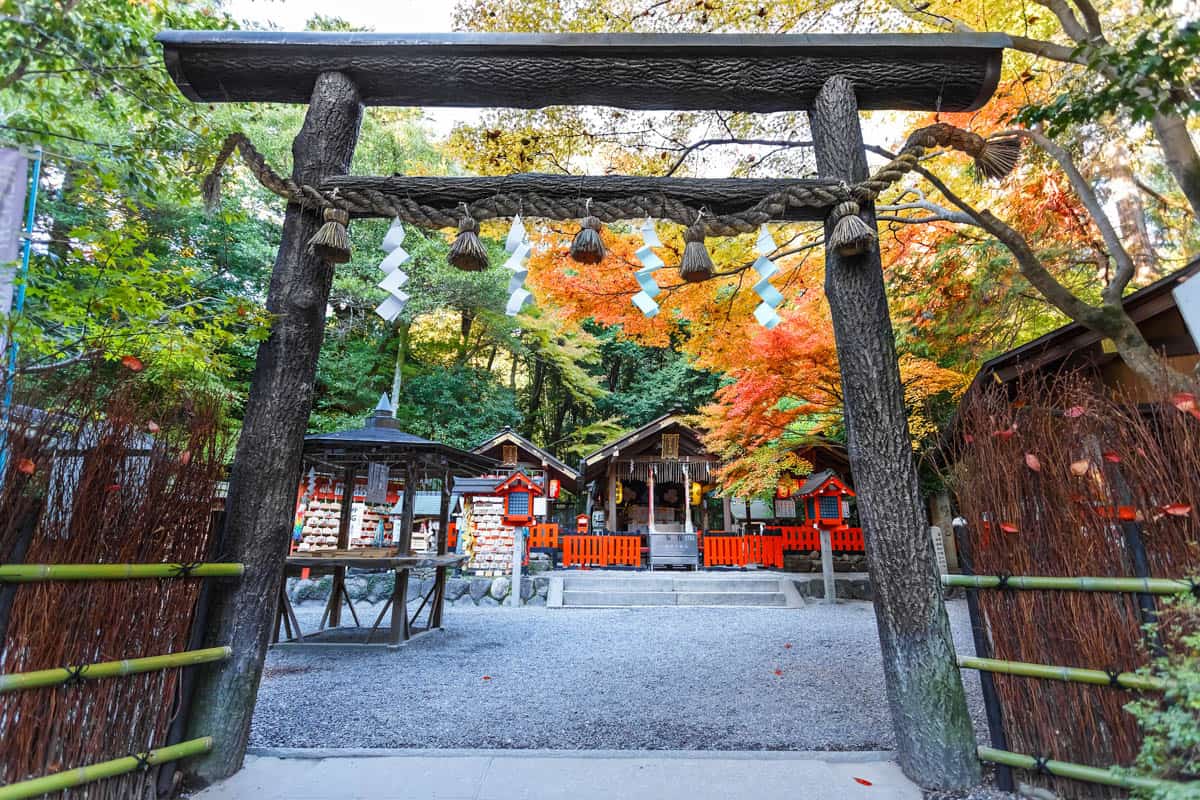
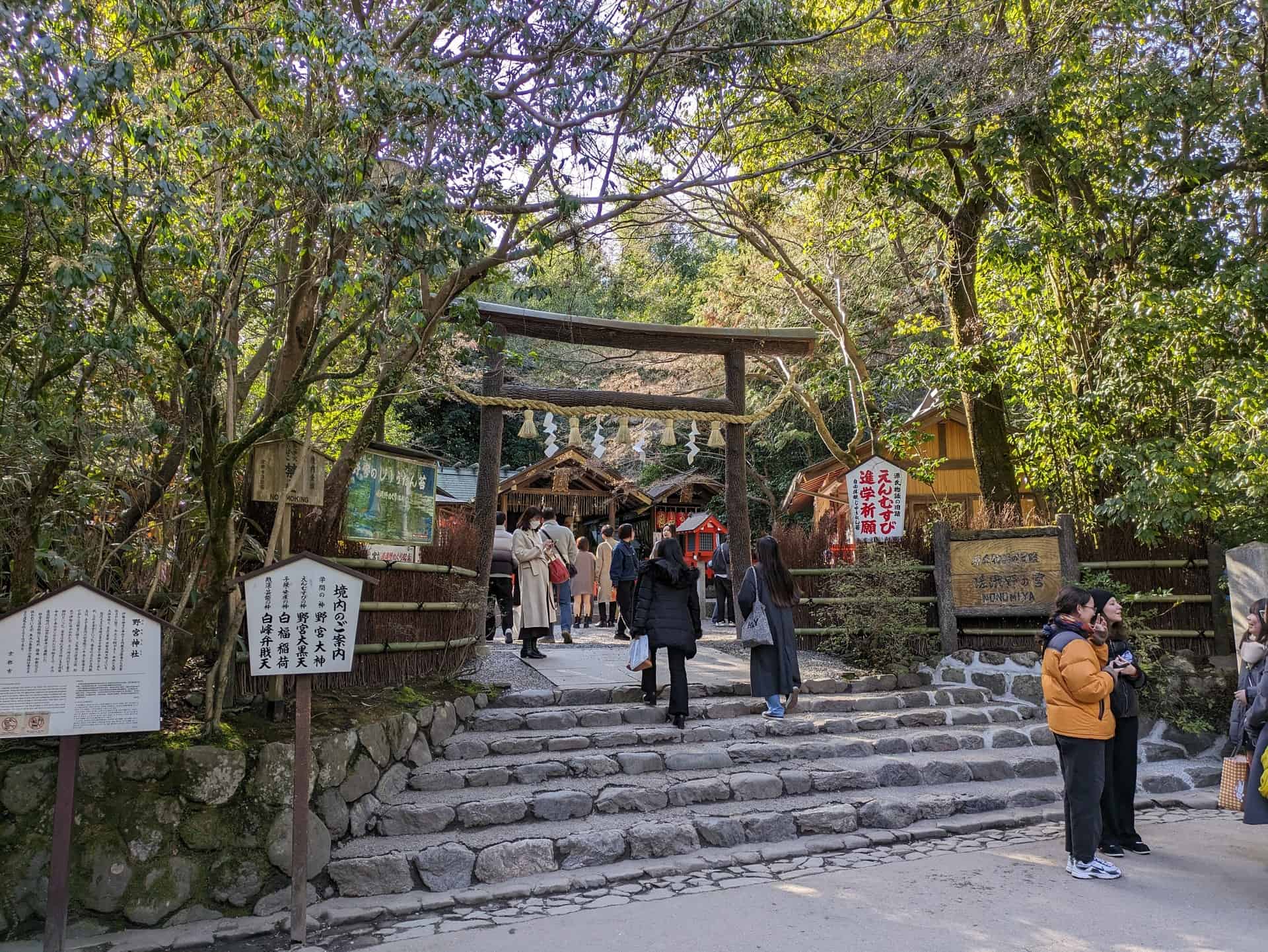
Nestled within the bamboo forest, this historic shrine is a serene stop on your route.
Experience the preserved Edo-period landscape with thatched-roof cottages and farmland.
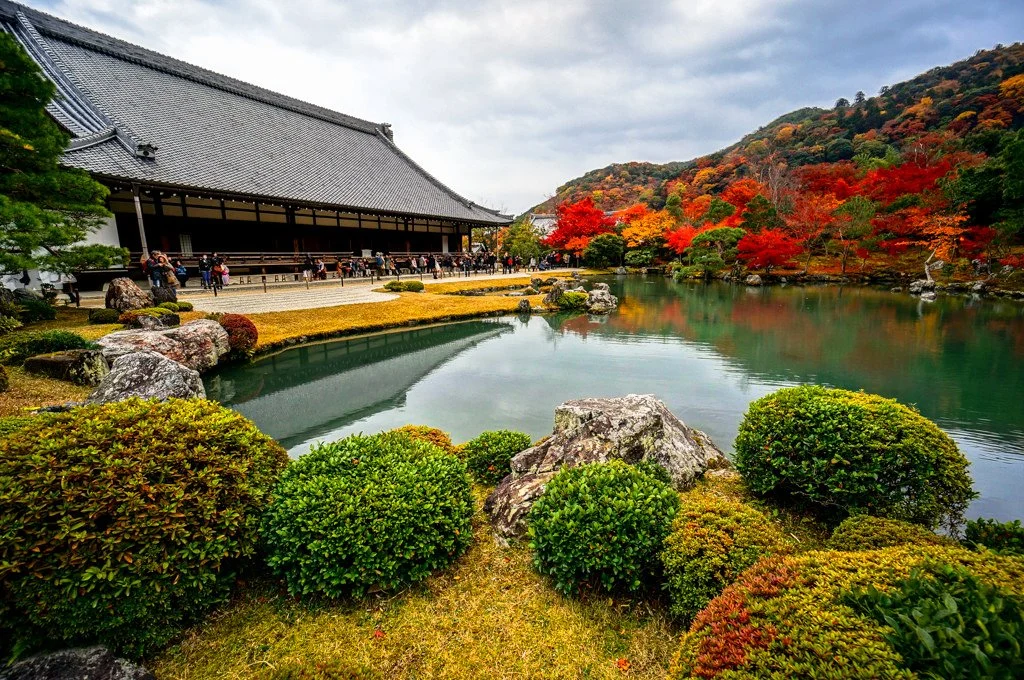
A world-famous Zen temple located conveniently near the rickshaw starting point.
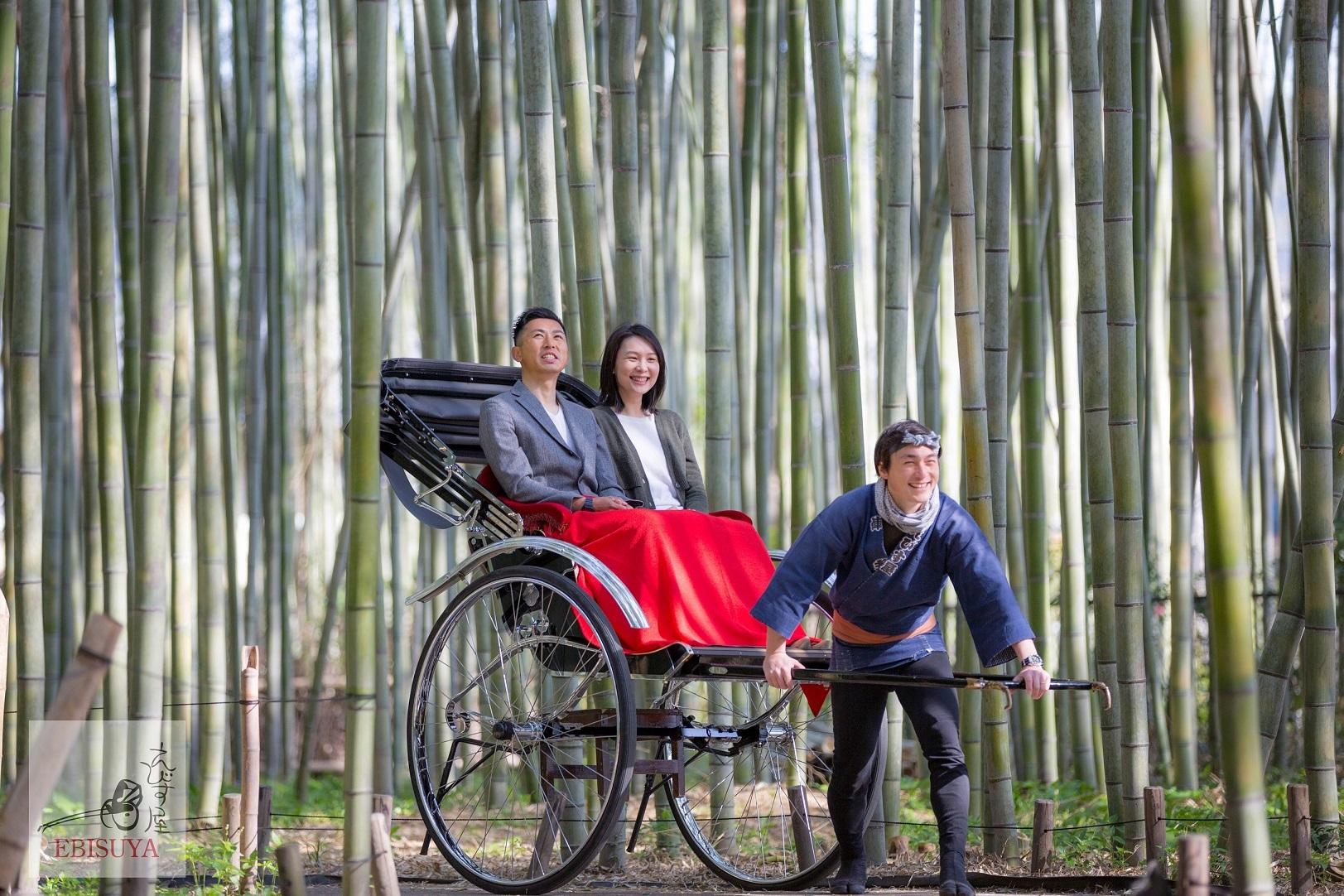
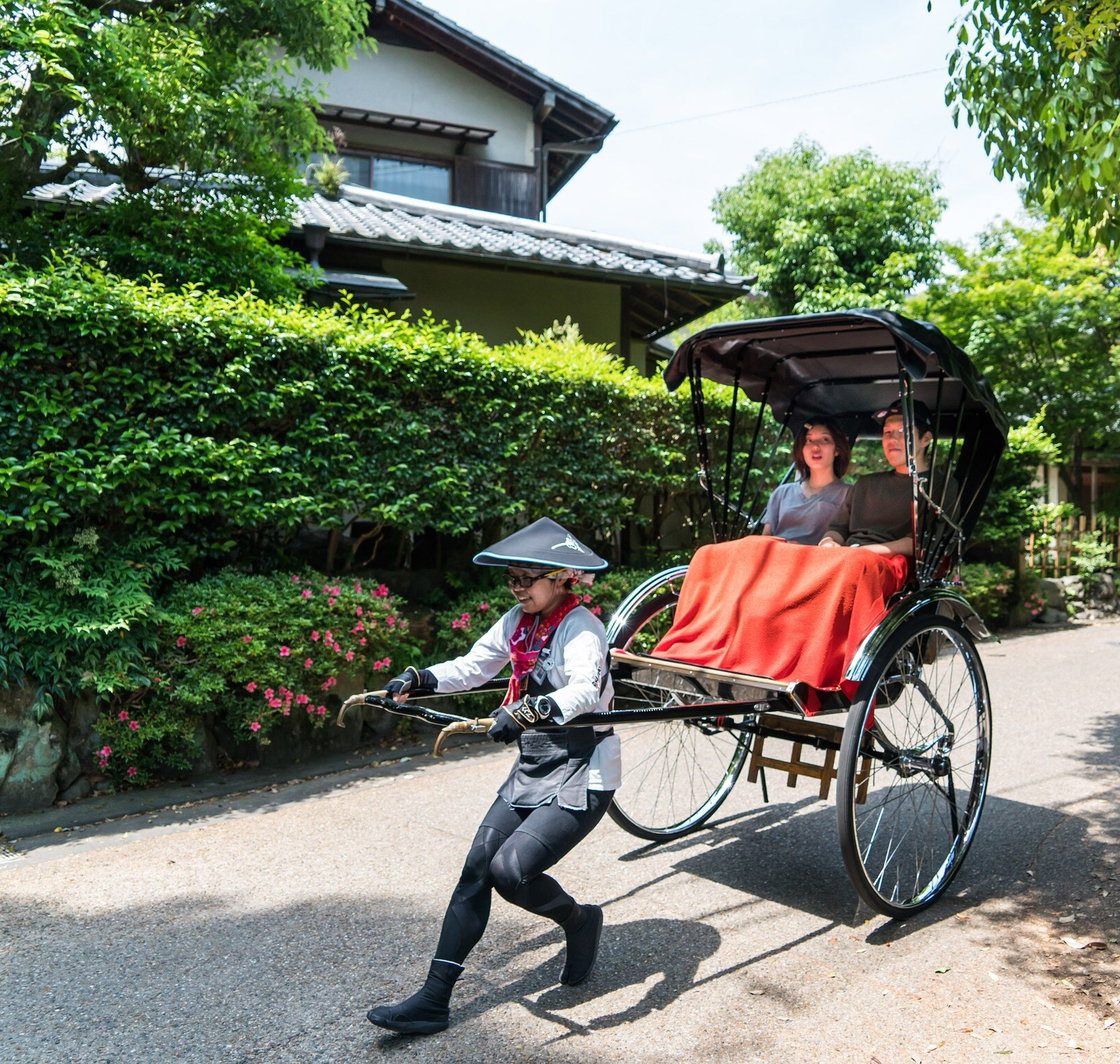
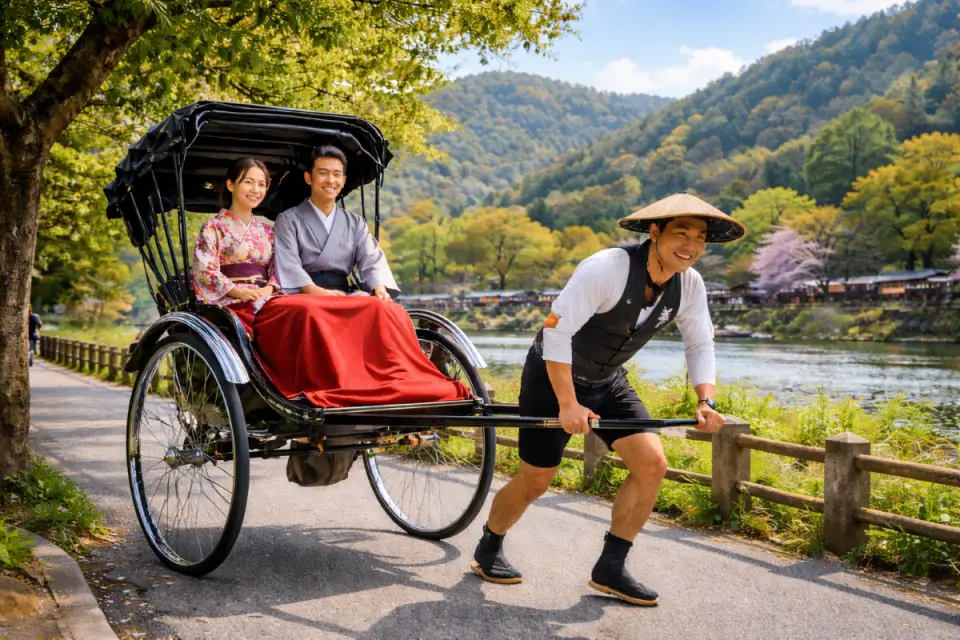
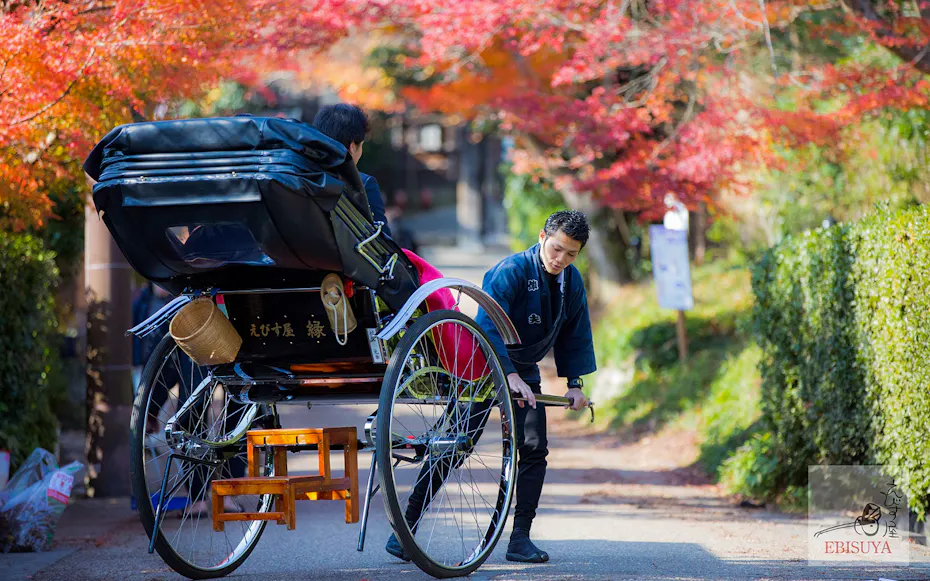
You arrive at Sagatenryuji Susukinobabacho between 10:00 and 12:00, before the peak crowds thicken in the bamboo forest area. The stand is unmissable: black-and-red carriages parked in a line, runners in navy happi coats and split-toe jika-tabi boots waiting beside them. You choose a course.
You step onto the footplate, sit back, and someone tucks a blanket over your knees whether or not August requires it.
Then the shafts lift and the ground drops away. You are higher than you expected. The runner starts at a walk, checks over his shoulder, and settles into a rhythm you feel through the frame rather than hear. He talks the whole way — pointing out the torii at Nonomiya Shrine, the Tenryū-ji wall on your right, the exact angle where the culms lean together.
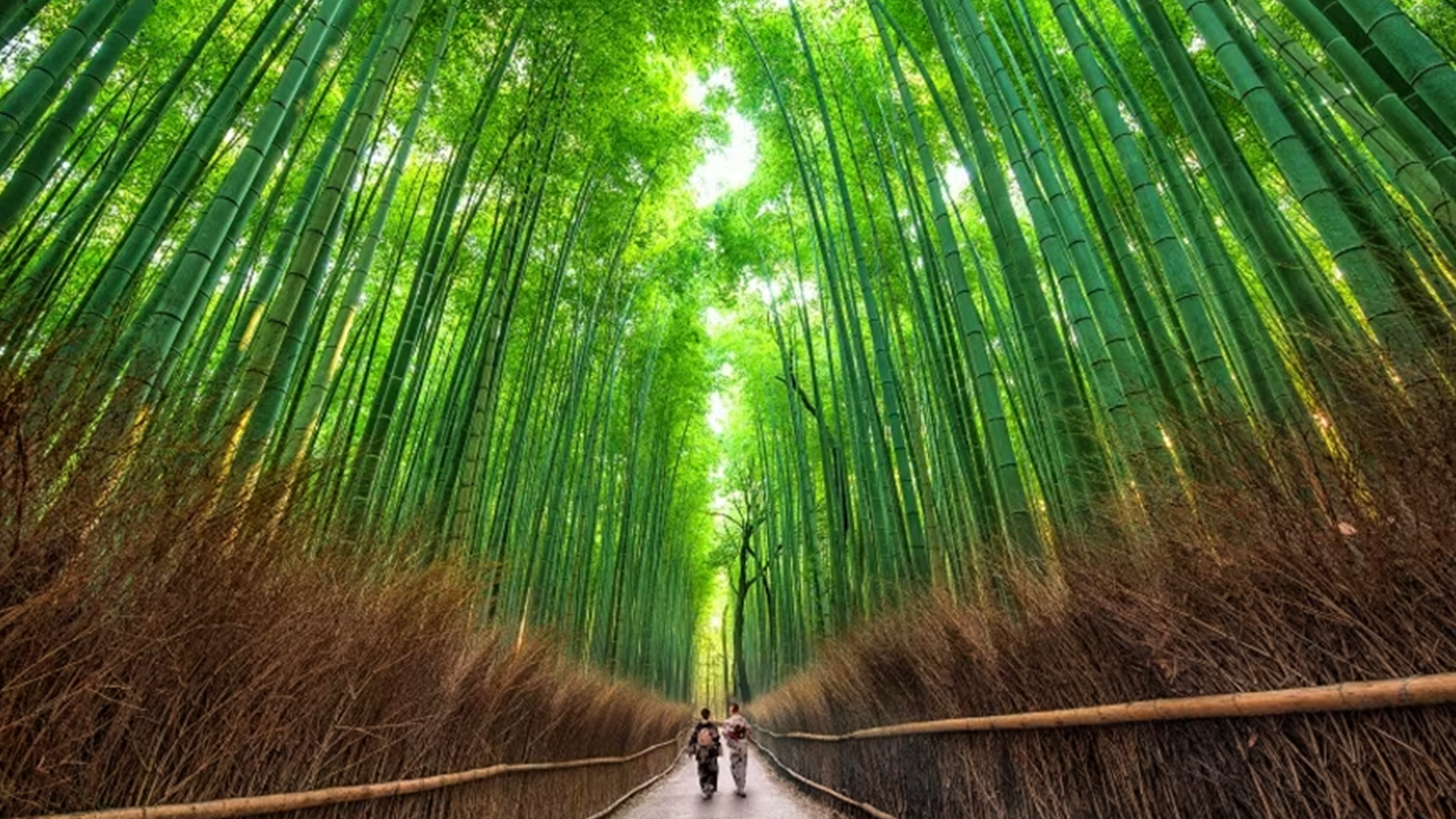
Inside the grove the light goes green. You pass walkers on foot and they turn to watch. Your arashiyama rickshaw ride slips down a side path they cannot use, and for perhaps ninety seconds the corridor is entirely yours.
You come out near the river. The runner stops, sets the shafts down, takes your phone without being asked and frames the shot. You climb down, legs stiff from sitting still, back at street level with the day still ahead.
All the details about your upcoming adventure in one place
The rickshaw was not born in Kyoto, and it is barely 150 years old. The jinrikisha — literally "human-powered vehicle" — appeared in Tokyo around 1869 and spread across Japan within a decade, displacing the palanquin almost entirely. By 1900 there were tens of thousands in service.
By 1940 there were almost none, cleared away by streetcars and taxis. Its survival in Arashiyama is therefore a revival rather than a continuity.
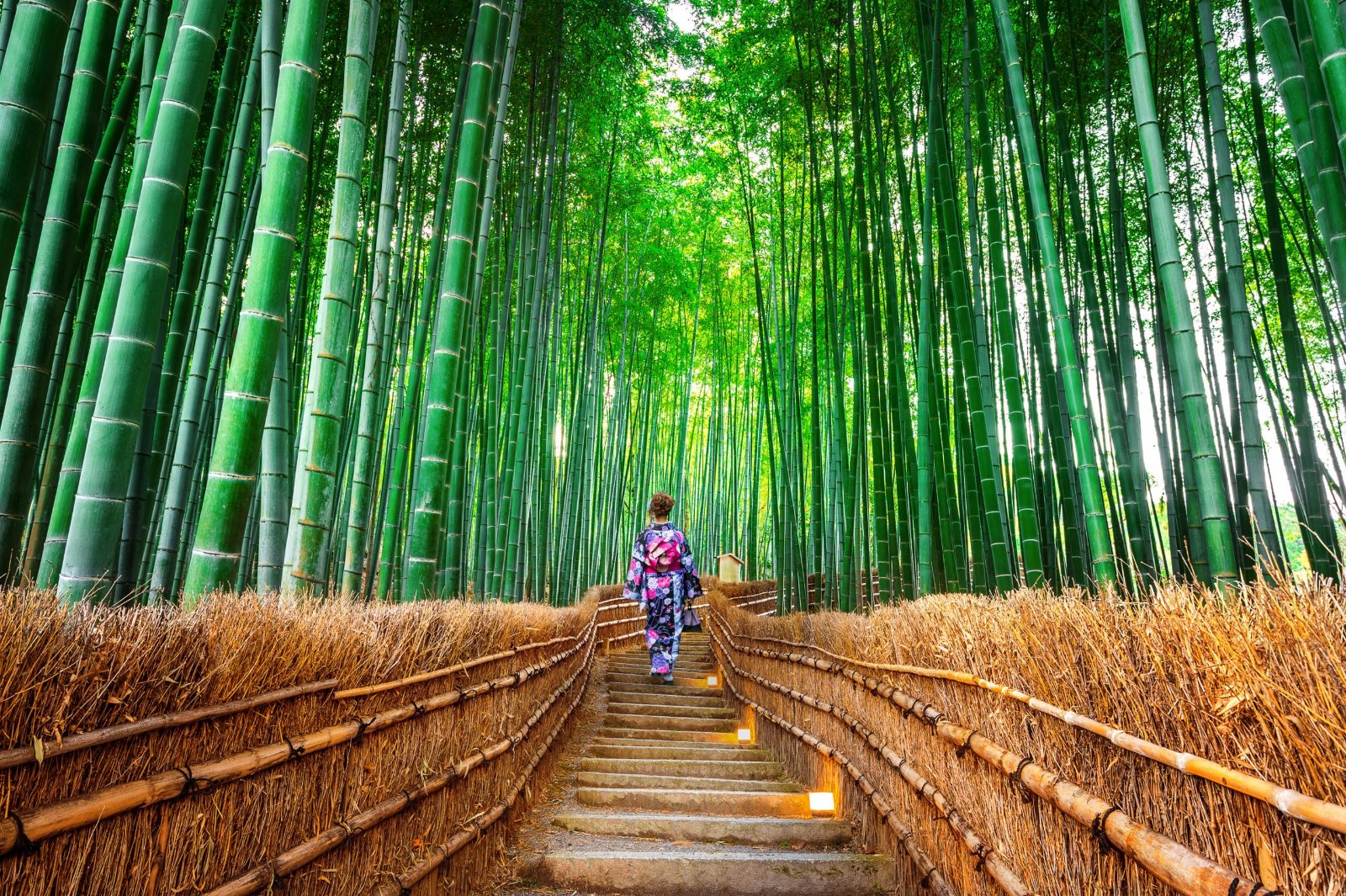
That revival matters because of what the district preserves. Arashiyama sits at the western edge of Kyoto, where the Hozu River narrows into a gorge before widening as the Katsura. Heian-period aristocrats came here for moon-viewing and boating parties; the Fujiwara built villas along the banks. Tenryū-ji, founded in 1339 by the shogun Ashikaga Takauji, anchors the district and holds a UNESCO World Heritage listing. Its Sōgen Pond garden, laid out by Musō Soseki, is one of the oldest surviving designed landscapes in Japan. The Sagano bamboo grove behind it grows on ground that has been managed for centuries — the culms are harvested, thinned and replanted, not left wild.
An arashiyama rickshaw ride is, in this setting, an unusually good instrument of access. The vehicles are narrow enough for the lanes north of Nonomiya Shrine that coaches cannot enter, and licensed operators may use short private paths inside the grove that are closed to general foot traffic. The runner is also a guide. Training for the trade takes months and covers route knowledge, local history and the physical discipline of hauling two passengers up a graded slope while speaking clearly.
The seat sits roughly a metre and a half above the road, which changes the sightlines completely. From that height the bamboo canopy closes overhead rather than framing a corridor ahead, and the tiled roofs of Sagano machiya become visible over their own walls.
Operators work from Sagatenryuji Susukinobabacho, Ukyo Ward, Kyoto, 616-8385, Japan, running daily from 10:00 to 17:00. There is no fixed entrance fee for the district itself: 0 JPY buys access to the streets, and rickshaw rides are charged by duration and course instead. That structure is why arashiyama rickshaw ride tickets vary so widely between a twelve-minute loop and a full riverside circuit. The lacquered frame, the folding hood, the brass lamp brackets — all of it is reproduction craft, built to a nineteenth-century pattern for a twenty-first-century audience that arrives by train.

Its survival in Arashiyama is a revival rather than a continuity.
Wear comfortable walking shoes for segments where you may explore on foot. During colder months, blankets are provided for your arashiyama rickshaw ride tour.
Small bags can be stored on the rickshaw during your arashiyama rickshaw ride. Larger luggage should be left at a nearby station locker.
Rickshaw pullers are happy to take photos of you at scenic spots during your arashiyama rickshaw ride. Keep your camera ready for the bamboo grove.
Children aged 5 and under ride for free when sitting on an adult's lap. Families can book multiple rickshaws to accommodate larger groups for an arashiyama rickshaw ride.
The arashiyama rickshaw ride is generally accessible, though some walking paths in the bamboo grove may be steep. Please notify the operator of specific needs in advance.
Bringing your own drinks is allowed during the arashiyama rickshaw ride. Please dispose of any trash responsibly at designated bins in Arashiyama.
Opening hours
10:00–17:00
Address
Sagatenryuji Susukinobabacho, Ukyo Ward, Kyoto, 616-8385, Japan
Accessibility
Suitable for all physical fitness levels; infants must sit on adult's lap
Best arrival window
10:00–12:00
Baggage
Strollers can be accommodated at the boarding area
Navigation
Rickshaw services available at the Arashiyama rickshaw ride stand
Public transport · 12 min · Approx 240 JPY
Take the JR Sanin Main Line to Saga-Arashiyama Station and walk 12 minutes.
Taxi · Varies · Varies
Request a drop-off near the Togetsukyo Bridge for the quickest access to the stand.
For a full refund, cancel at least 24 hours before the scheduled departure time. No fixed entrance fee; rickshaw rides are charged by duration and course.
Recommended time
45 minutes to 2 hours
Most guests prefer a 60-minute excursion to navigate the bamboo paths and local temples comfortably. An arashiyama rickshaw ride allows you to bypass pedestrian congestion while local guides share historical insights about these Kyoto landmarks. Planning your arashiyama rickshaw ride tours during the morning helps ensure a fluid experience before the midday heat and foot traffic peak. For those needing flexible arashiyama rickshaw ride tickets, booking ahead ensures your preferred pace and duration for the kyoto sightseeing journey.
Crowd levels through the day
Weather · crowds · average price — dots go green to amber to red as each metric rises.
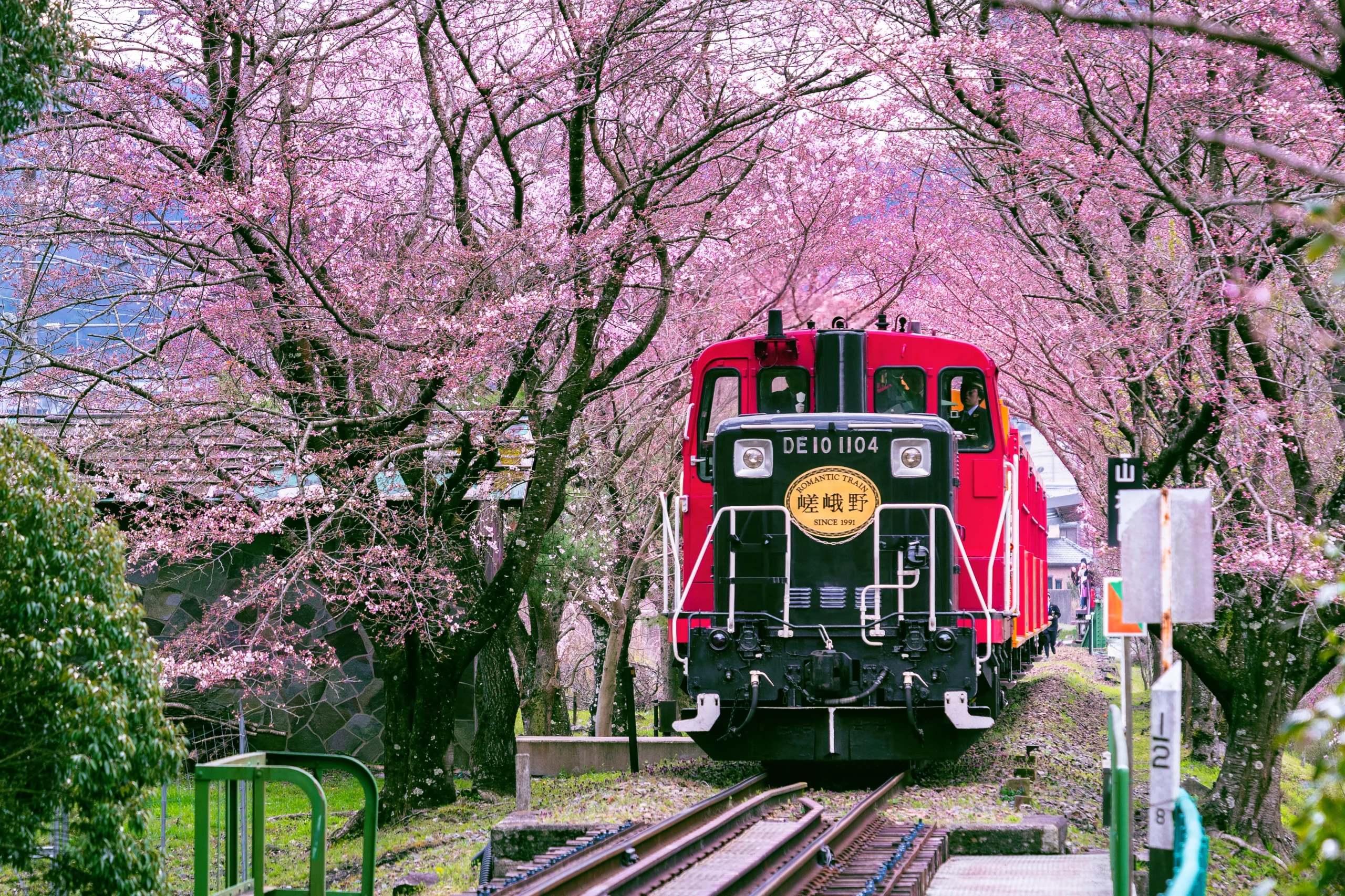
Cherry blossoms create a vibrant backdrop for an arashiyama rickshaw ride.
Lush greenery provides shade, though humidity can be high in the afternoon.
Peak season for fall colors; book your arashiyama rickshaw ride well in advance.
Cooler weather with fewer crowds; blankets are provided for comfort.
Sagatenryuji Susukinobabacho, Ukyo Ward
Look for the rickshaw stand near the river
Get directionsThe jinrikisha was invented in Tokyo around 1869, credited to Izumi Yosuke and his collaborators. By 1872 some 40,000 licensed vehicles worked the capital's streets. Kyoto adopted them quickly. The two-wheeled pullers carried merchants along the Katsura River long before any modern arashiyama rickshaw ride existed as a leisure product. Their decline was equally sharp. Electric trams reached Kyoto in 1895, the first in Japan, and the motor taxi finished the work by the 1920s. The craft survived as ceremony rather than transport. Ebisuya, the operator based at Sagatenryuji Susukinobabacho in Ukyo Ward, began pulling in Arashiyama in 1992, when the trade had almost vanished from public streets. Its shafts were rebuilt to a lighter specification; drivers, called shafu, train for months in route commentary as much as in hauling. The revival coincided with the bamboo grove's rise as a photographed emblem of Kyoto, and with Tenryu-ji temple's inscription as a UNESCO World Heritage Site in 1994. Controversy followed the crowds. By 2019 Arashiyama received record visitor numbers, and residents of Saga complained of congestion on the narrow Nonomiya lanes. Kyoto City responded with pedestrian-flow measures. The 2020 closures emptied the district entirely; operators cut fleets and drivers left the profession. Recovery came slowly through 2023 and 2024, and Sagano rickshaw tours returned to something near their former scale. What survives is a hybrid. The vehicle is nineteenth-century in form, the commentary is modern heritage interpretation, and the routes trace the Ogura hills, the Togetsukyo bridge approaches, and the Okochi Sanso estate walls. Arashiyama rickshaw ride tours now operate daily from 10:00 to 17:00, with no fixed entrance fee. Booking an arashiyama rickshaw ride tour is charged by duration and course, and arashiyama rickshaw ride tickets are priced from the courses listed in the grid above.
The jinrikisha is invented in Tokyo and credited to Izumi Yosuke and his associates.
Roughly 40,000 licensed rickshaws operate in the capital, and the vehicle spreads to Kyoto.
Japan's first electric tramway opens in Kyoto, beginning the rickshaw's decline as everyday transport.
Motor taxis displace the remaining commercial pullers from Kyoto streets.
Ebisuya begins operating rickshaws in Arashiyama, reviving the trade as heritage sightseeing.
Tenryu-ji is inscribed as a UNESCO World Heritage Site, raising the district's international profile.
Record visitor numbers prompt Kyoto City congestion measures on the narrow Saga lanes.
Pandemic closures empty the district, followed by a gradual recovery of fleets and drivers.
Position your camera at the low angle where the rickshaw puller aligns the vehicle between the towering green stalks to capture the classic Arashiyama rickshaw ride perspective.
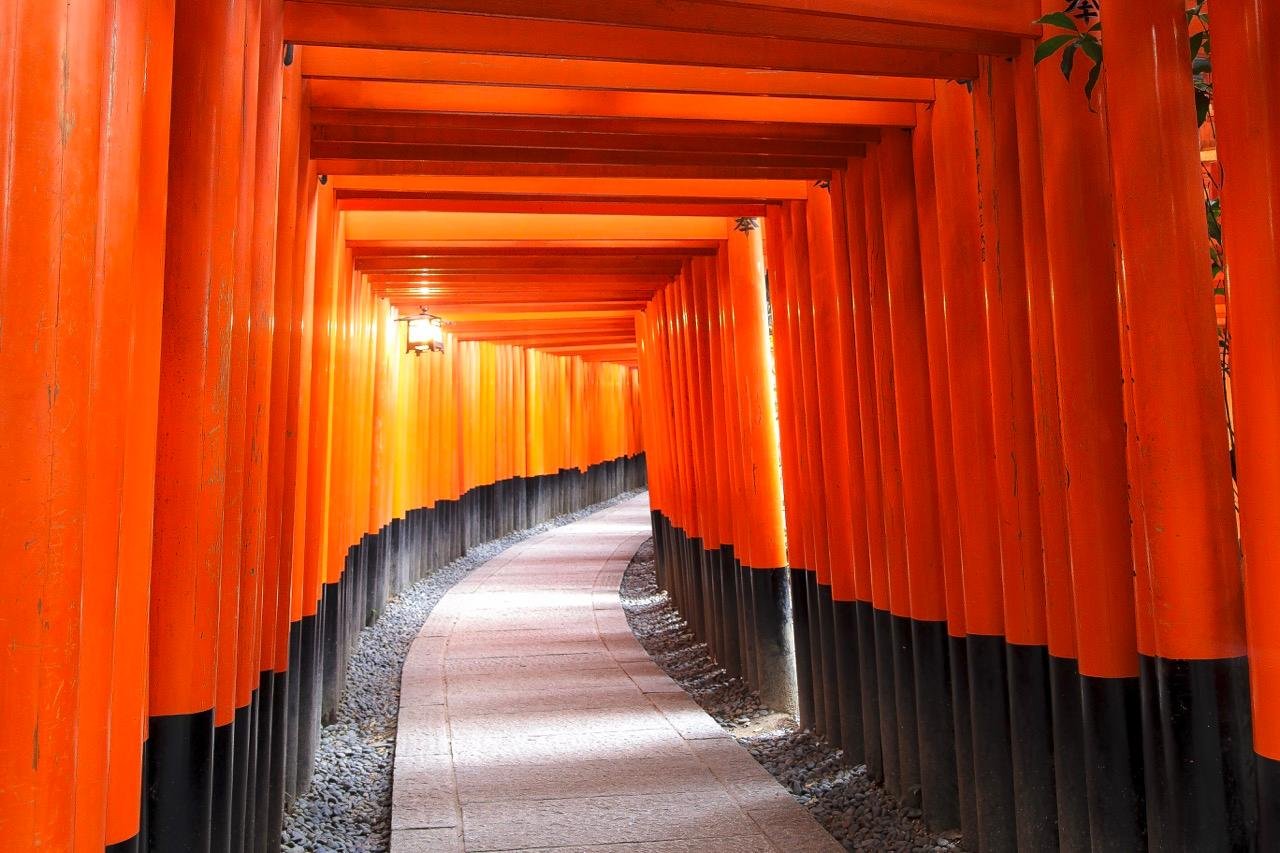
Stand by the black wooden torii gate as the puller pauses here, allowing you to frame the historical entrance with the carriage in the foreground.
Request a stop at the north end of the bridge to photograph the Hozugawa River and the surrounding mountains reflected in the water.
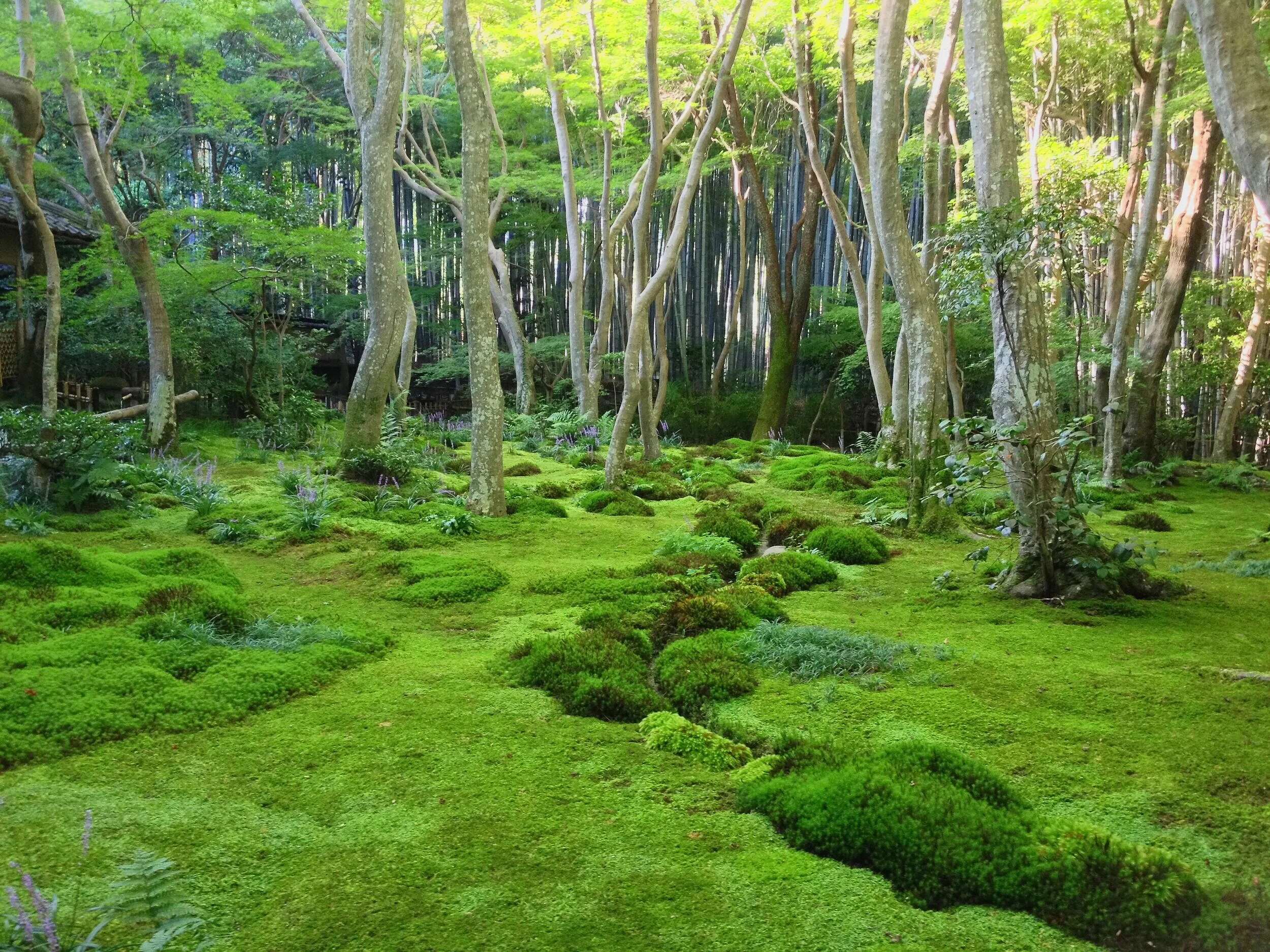
Capture the lush, vibrant moss and maple trees while seated in the rickshaw at this tranquil temple entrance, which is a popular stop for arashiyama rickshaw ride tours.
Wait for the puller to position the rickshaw near the tracks to document the contrast between the traditional transport and the passing rail scenery for your arashiyama rickshaw ride tickets collection.
Exploring the historic Sagatenryuji area is best complemented by a meal near your arashiyama rickshaw ride, as the neighborhood offers a dense concentration of traditional Kyoto cuisine. Visitors enjoying an Arashiyama rickshaw ride tour will find numerous teahouses and eateries just a short stroll from the primary departure point.
Specializes in multi-course tofu meals and seasonal tempura, offering a serene atmosphere for a sit-down lunch after your Kyoto rickshaw tour.
Renowned for handmade soba noodles served with views of the Katsura River, making it a popular stop for those using skip-the-line Arashiyama rickshaw ride tickets.
Located along the main thoroughfare, this spot provides quick bites like dango and matcha soft-serve, perfect for a casual snack between Arashiyama rickshaw ride tours.
Everything you need to know for your journey
The arashiyama rickshaw ride operates daily from 10:00–17:00.
There is 0 JPY entrance fee; rickshaw rides are charged by duration and course.
Yes, you can secure arashiyama rickshaw ride tickets online or via authorized travel agents.
We recommend starting your arashiyama rickshaw ride tour between 10:00–12:00 to avoid peak crowds.
Yes, children aged 5 and under ride for free on an adult's lap during an arashiyama rickshaw ride.
Absolutely, photography is encouraged and drivers can assist with photos on your arashiyama rickshaw ride.
Please store large bags in lockers before starting your arashiyama rickshaw ride tour.
Yes, the rickshaws feature a canopy that protects passengers during light rain on an arashiyama rickshaw ride.
The rickshaw stand is located at Sagatenryuji Susukinobabacho, accessible by walking from local stations.
For a full refund, cancel your arashiyama rickshaw ride tour at least 24 hours before your departure.
Join thousands of happy travelers who have discovered this incredible experience
Book Your Experience Now