
Quick answer
For most visitors, yes — is arashiyama monkey park worth it comes down to whether a 120-step ascent suits you, in exchange for free-roaming macaques and a panorama across Kyoto for an 800 JPY conservation fee, cash only. The park runs 09:00–16:00 daily. Travellers with limited mobility, or those on a tight half-day in Arashiyama, may reasonably skip it.
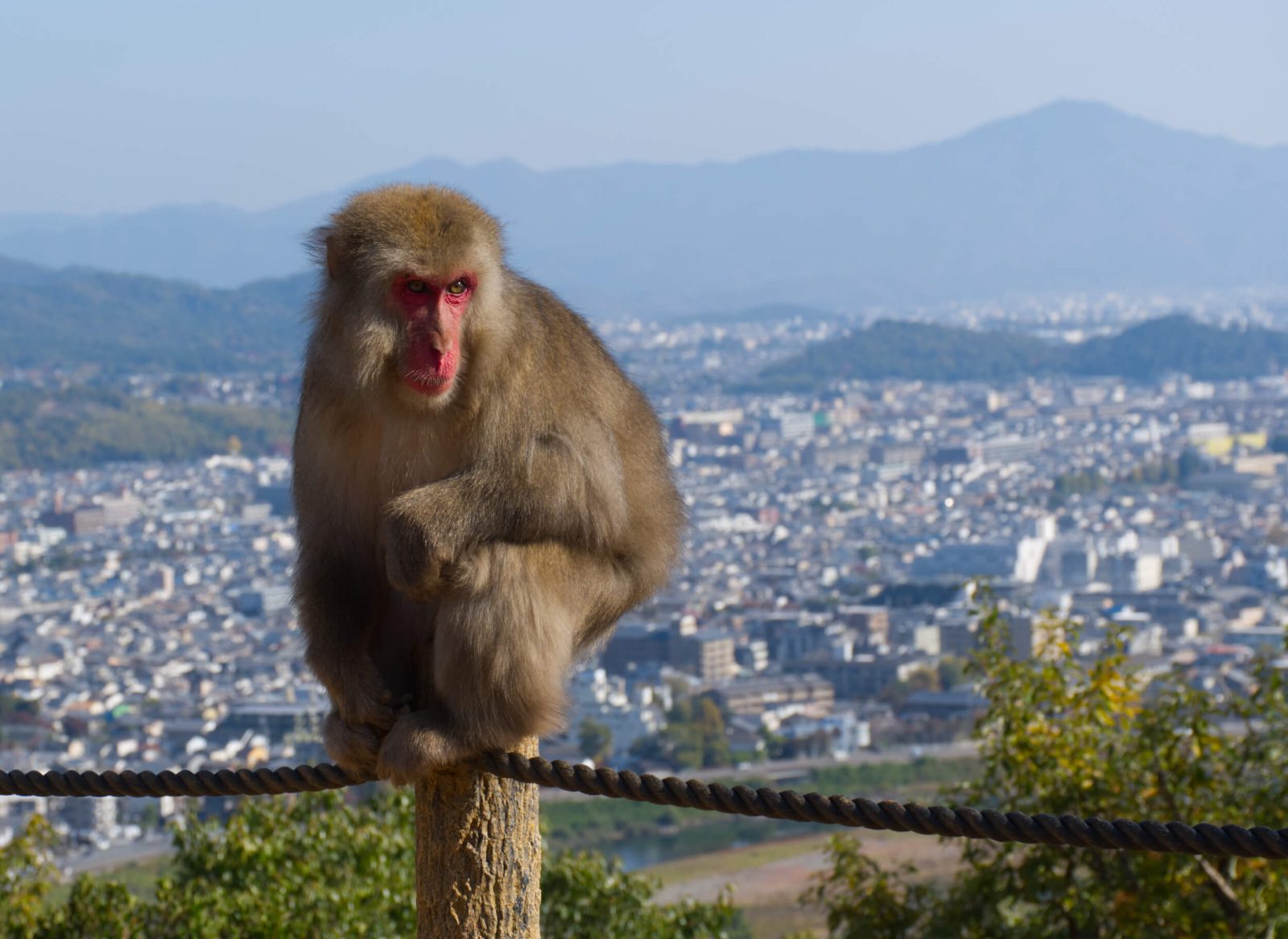
The macaques at Iwatayama are not fenced in — the visitors are. At the summit rest house, the arrangement inverts every zoo convention most travellers know: people stand inside a mesh-screened hut to hand apple and peanut portions through the wire, while the troop moves freely across the open hillside outside. That single detail is the honest core of any answer to is arashiyama monkey park worth it, because it is the one thing no other stop in the district replicates. The Bamboo Grove offers scenery. Tenryu-ji offers a garden. Iwatayama offers behaviour: grooming lines, juveniles chasing each other over the shelter roofs, dominance squabbles resolved in seconds. The context that makes the verdict make sense is geography. The entrance sits across the Katsura River from the main Arashiyama strip, at the foot of Mount Iwata, and the summit is reached only on foot up a switchbacking woodland path. Kyoto landmarks rarely ask this much of a visitor. In August heat the ascent is genuinely demanding, and the hillside offers little shade at the top. Anyone weighing an Arashiyama walking tour against this climb should treat the two as different categories of outing rather than interchangeable ones. Families with pushchairs, in particular, should plan for carrying rather than wheeling. What the summit returns is unusual for Kyoto: an unobstructed sightline over the city basin, with the Kamo and Katsura river plains laid out below and Kyoto Tower visible on clear days. The macaques, a protected troop studied by researchers since the 1950s, are habituated but not tame — staff enforce no-eye-contact and no-touching rules, and food is handed over only from inside the hut. Those rules exist because the animals are wild, and they are the reason the population has remained stable. So the practical answer to the question of whether visiting the 嵐山モンキーパークいわたやま is a good use of half a morning turns on sequencing. Most visitors budget between one and two hours door to door, and the experience rewards those who arrive while the troop is still active rather than dozing through the afternoon. Read this page's timing, access and cost sections for the figures, then slot the park into a wider Arashiyama itinerary rather than treating it as a standalone stop. Judged that way, is arashiyama monkey park worth it becomes less a question of value than of stamina and scheduling.
“The macaques are not fenced in — the visitors are.”
When Is Arashiyama Monkey Park Worth It? Timing and Crowds
The best arrival window is 09:00–15:30, as early morning visits provide the most active monkey behavior while helping you avoid peak midday crowds and summer heat. Planning your visit during these hours ensures a more manageable pace when navigating the path to the summit.
Weekday mornings
Minimal—
Arriving at 09:00 allows for quiet observation before tour groups arrive.
Spring (April)
HighMild, 10°C–20°C
Cherry blossoms increase foot traffic; visit mid-week to mitigate density.
Autumn (October/November)
HighCool, 12°C–22°C
Fall foliage draws large crowds; prioritize early morning access.
Summer (July/August)
ModerateHot, 25°C–35°C
High temperatures make the ascent physically demanding; arrive early to beat the heat.
Verdict: The most favorable time is Tuesday to Thursday, arriving at 09:00, during the months of April or October.
Is Arashiyama Monkey Park Worth It: Current Operating Hours
Arashiyama Monkey Park maintains a consistent daily schedule throughout the year, welcoming visitors seven days a week.
| Monday | 09:00–16:00 | |
|---|---|---|
| Tuesday | 09:00–16:00 | |
| Wednesday | 09:00–16:00 | |
| Thursday | 09:00–16:00 | |
| Friday | 09:00–16:00 | |
| Saturday | 09:00–16:00 | |
| Sunday | 09:00–16:00 |
How to Visit and Reach the Summit: Is Arashiyama Monkey Park Worth It?
This sequence takes you from the Katsura River crossing to the summit viewpoint at Iwatayama, covering the 120-step access climb and what happens once you reach the monkeys. Allow roughly 90 minutes to two hours round trip, including time at the top.
Find the Togetsukyo entrance
Walk to 61 Nakao Shita cho, Arashiyama, Nishikyo-ku, Kyoto, 616-0004, on the south bank of the Katsura River just past Togetsukyo Bridge. Most visitors overshoot it because the entrance sits behind the torii gate of Ichitani Shrine rather than facing the main street.
Pay at the ticket hut
Settle the conservation fee at the small booth immediately inside the shrine grounds before you start climbing. Bring cash — the booth does not take cards, and the nearest reliable ATM is back across the bridge.
Prepare before the climb
Fill your water bottle and secure loose bags, hats and sunglasses at the base. There is no shop partway up, and dangling straps become a target once you are among the monkeys.
Climb the 120 steps
The access route runs 120 steps followed by a graded dirt path, taking most people 15 to 20 minutes at a steady pace. Take the wider zigzag path rather than the steeper shortcut if you have knees, a stroller or small children with you.
Rest at the halfway clearing
A bench area partway up gives a first view over the Kyoto basin. Many visitors push through without stopping and arrive at the top too winded to enjoy it.
Enter the summit plateau
At the top the path opens onto an open grassy plateau where the macaques roam freely and the city view stretches east toward Kyoto Tower. Do not crouch, eat, or make eye contact — these read as challenges to the troop.
Feed from inside the hut
Buy apple pieces or peanuts inside the mesh-walled feeding house and pass them through the wire. The rule reverses what people expect: humans stay enclosed, monkeys stay outside.
Descend the same route
Return by the path you climbed, allowing 15 minutes down. Loose gravel on the steeper section catches people out on the descent more often than on the way up.
Combining Your Visit: Is Arashiyama Monkey Park Worth It Nearby?
The Arashiyama Monkey Park is located on the southern bank of the Katsura River, making it a logical starting or ending point for a broader circuit of the district. Pairing the hike with nearby cultural landmarks allows for a structured flow that balances outdoor activity with quiet temple exploration.
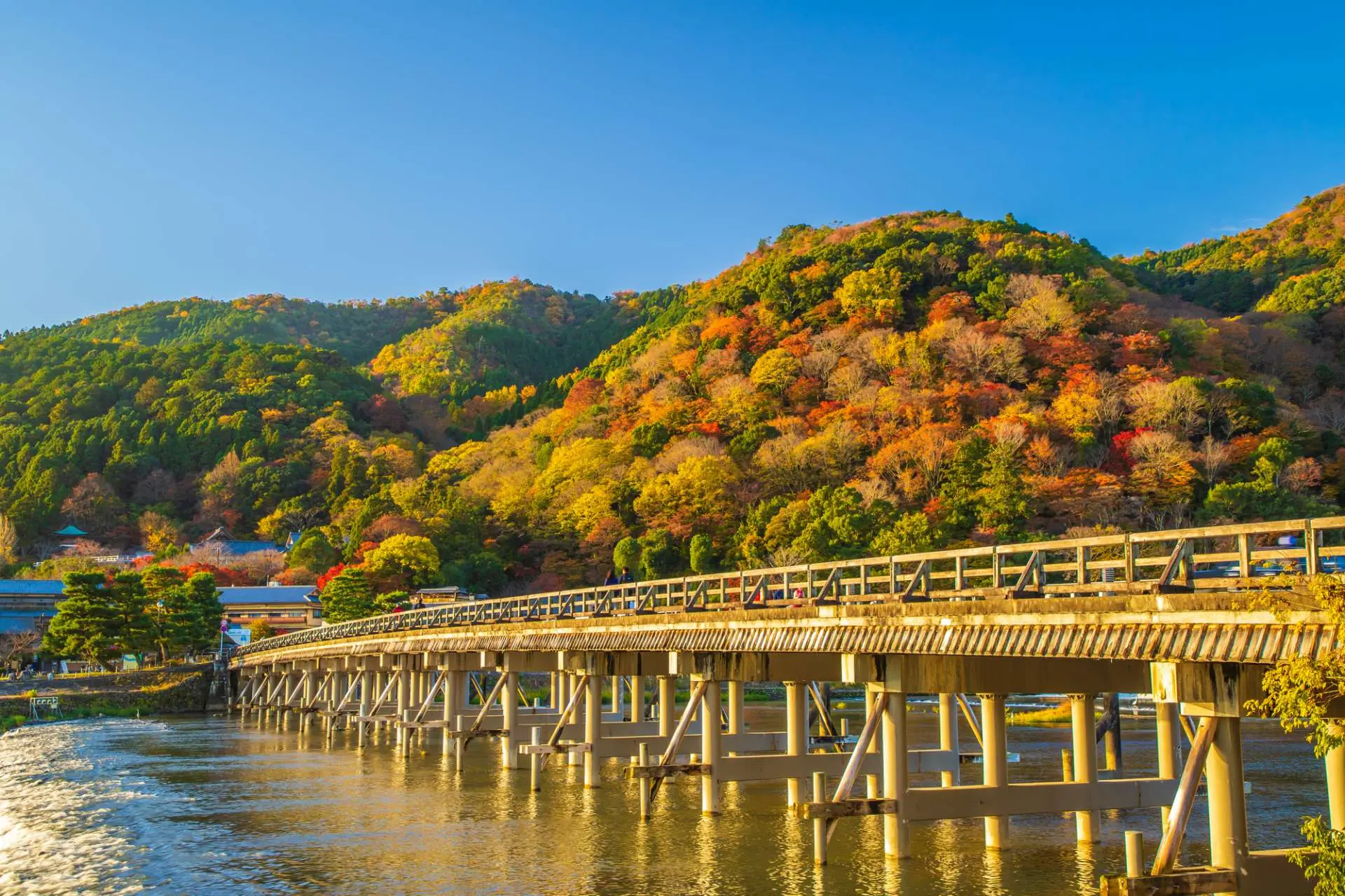
Togetsukyo Bridge
This iconic landmark connects the monkey park to the main Arashiyama village and provides views of the river valley.
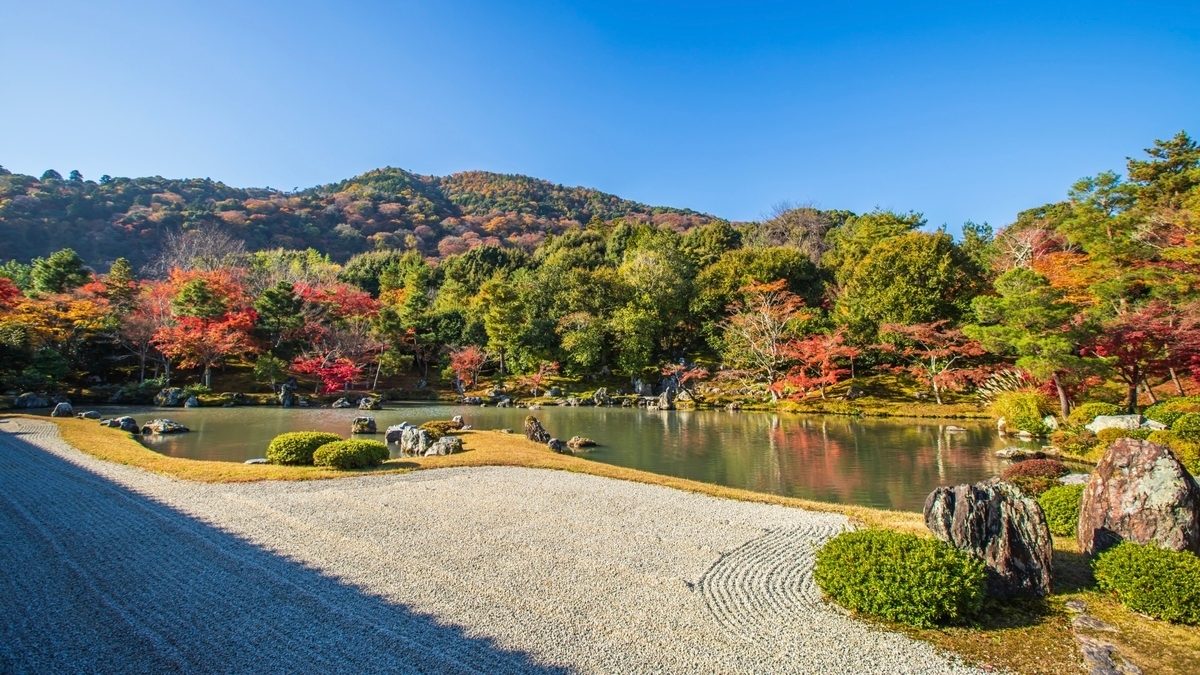
Tenryu-ji Temple
As a major Zen temple complex, it provides a peaceful contrast to the physical activity of the monkey park.
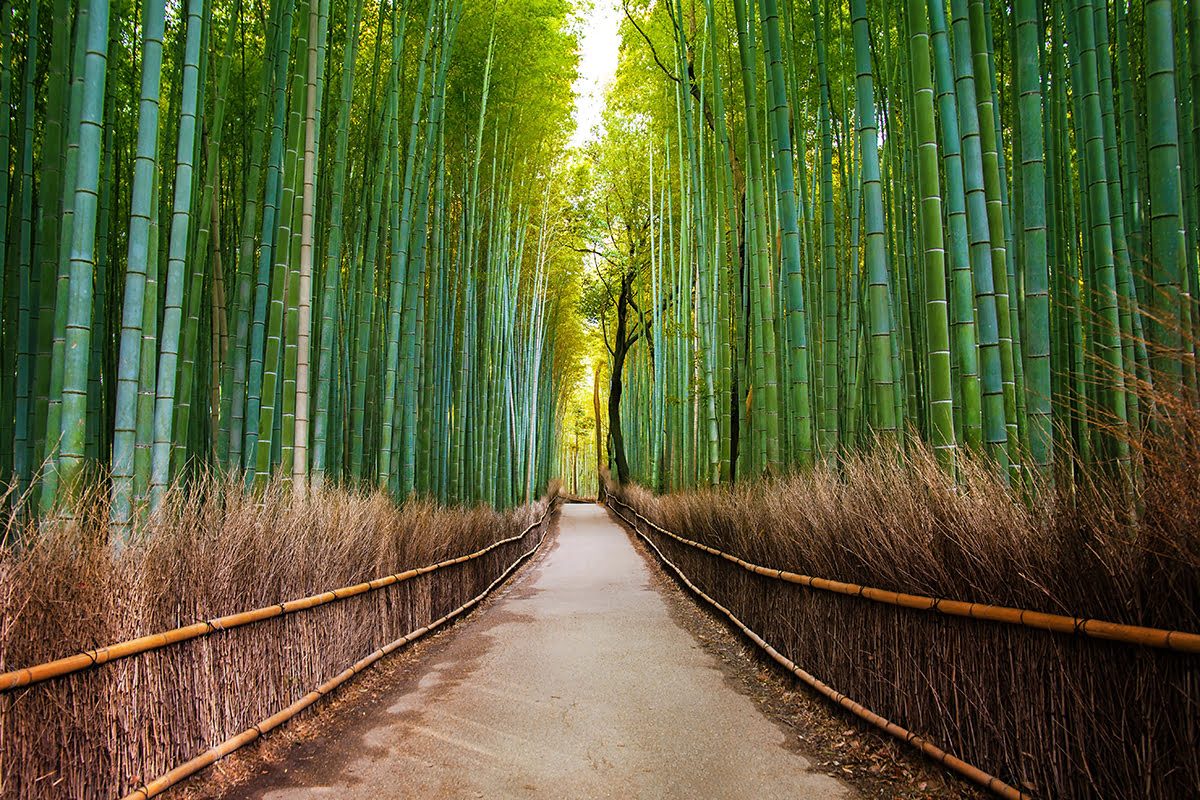
Arashiyama Bamboo Grove
Following your climb, this famous path offers a shaded and tranquil route through the towering bamboo stalks.
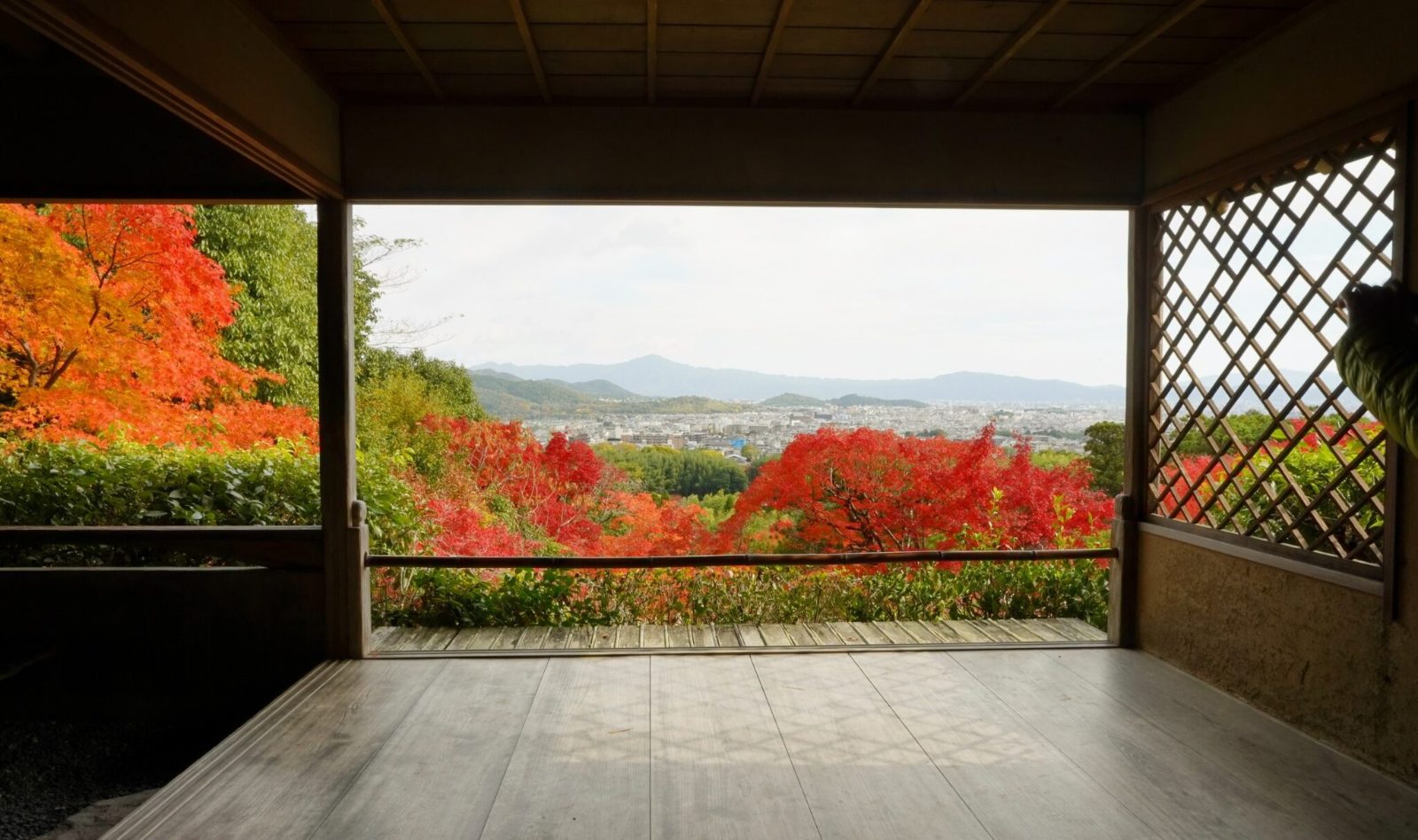
Okochi Sanso Garden
Located at the north end of the bamboo grove, this former villa offers elevated views of the area and matcha service.
Check availability
Common questions about visiting Arashiyama Monkey Park
Everything you need to know about is arashiyama monkey park worth it